
All-Electric Ford Puma Gen-E®


Ranger has long been the benchmark for pickups in Europe; it’s had eleven straight years topping the sales charts,1 and almost half of all pickups sold across the region last year had a Ford badge on the grille.
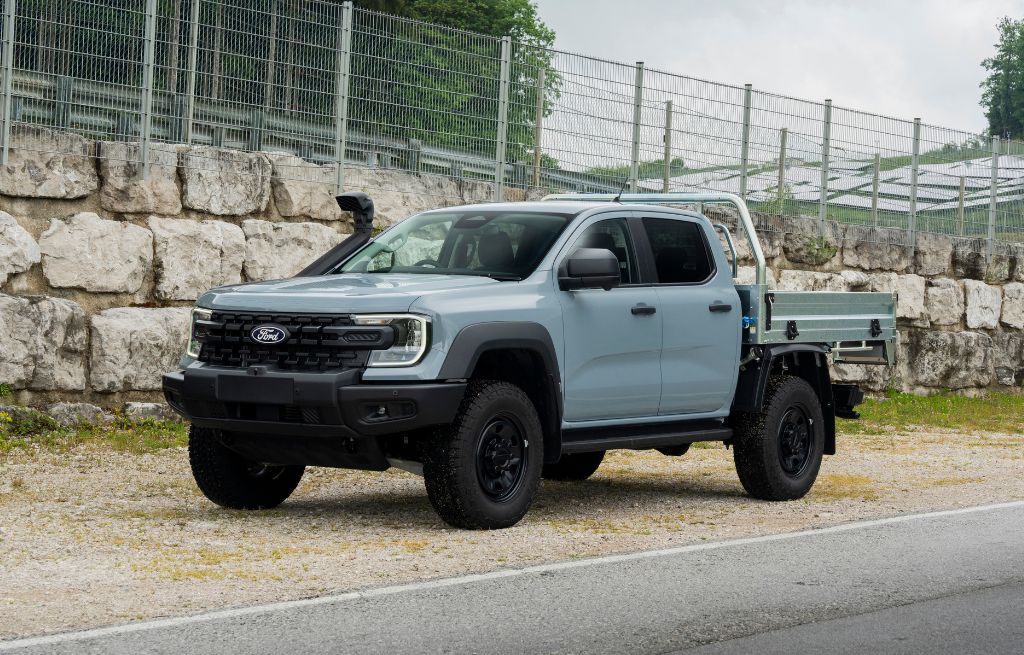
The new pinnacle of that capability is the Ranger Super Duty. This is the toughest Ranger ever built — designed for operators who carry and tow heavier loads in harder-to-reach places. Here’s what it took to re-engineer our modern icon so it could take on the continent’s toughest jobs.
It’s new to Europe, but Super Duty has been a label for Ford’s most capable trucks in North America for decades and recently caused a lot of excitement in the Asia-Pacific region when we launched Ranger Super Duty in places like Australia, New Zealand, Thailand and soon South Africa. It’s how customers can recognise the vehicles we’ve engineered to carry and tow the heaviest loads in the harshest conditions.
“It's new to Europe, but Super Duty has been a label for Ford's most capable trucks in North America for decades and recently caused a lot of excitement in the Asia-Pacific region.”
Kyle Shearer, segment chief engineer, Ranger, Europe
We’re constantly in touch with existing and potential customers, and their input convinced us that there was a market for a Ranger Super Duty in Europe. As Ford Pro supports businesses of every type and size, we had to answer those customers operating pickups at the extreme edge of capability. Look at mining, emergency services in remote areas, defence or heavy forestry, and you soon realise how much punishment their vehicles go through and how important the right vehicle is to safely and effectively do the job.
Those customers used to spend lots of time and money upgrading vehicles to cope with what work threw at them. Now, Ranger Super Duty gives them a factory-built answer that can carry and tow about a tonne more than a standard Ranger.2,3,4 That’s massive for them, and means we’ve basically created a new market segment in Europe.
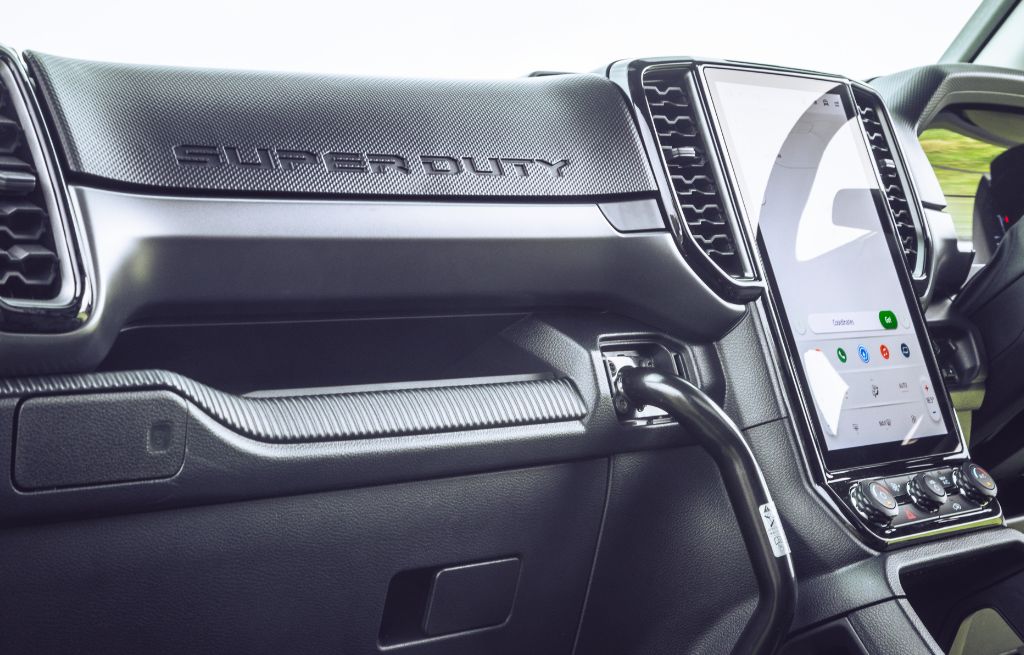
It looks like a Ranger because it still is one. Customers want to carry tonnes of cargo off-road but without giving up Ranger’s comfort and tech. It’s not like driving a digger; you still get heated seats, a 12-inch SYNC touchscreen,5 and the driver assistance and safety features6 that help workers out in the wild.
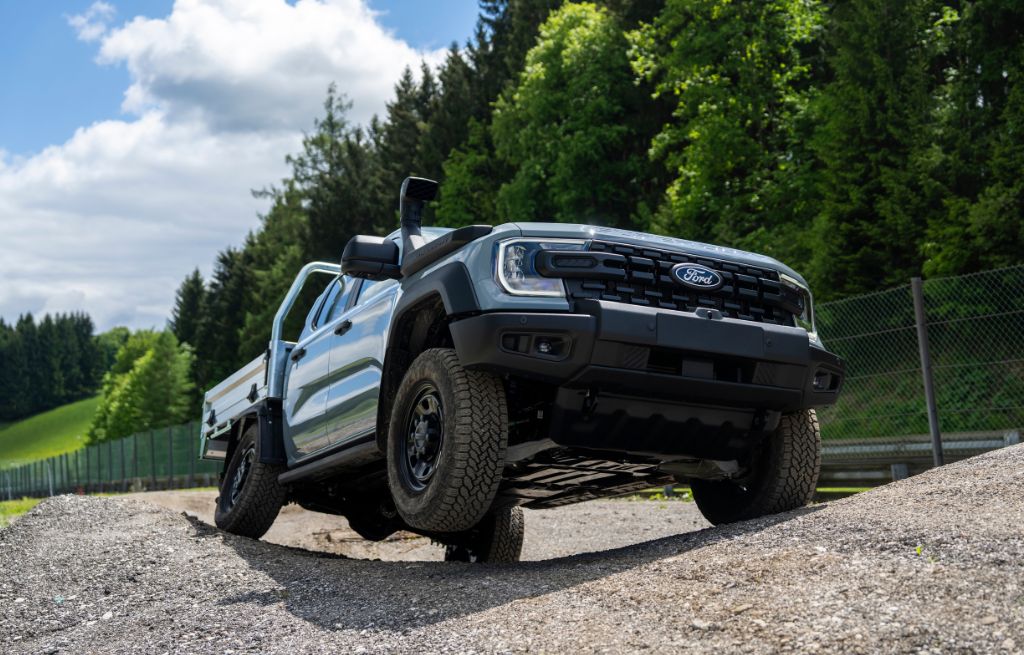
It’s in the hardware that we’ve done most of the work. Ranger Super Duty gets a thicker chassis frame, reinforced driveshafts and suspension, and the strongest rear axle we’ve ever put on a Ranger. The tow bar mount and hooks have been strengthened, and we’ve moved to an eight-stud wheel hub pattern with larger bolts to manage the increased weight.
The 3.0-litre V6 turbodiesel engine and 10-speed automatic gearbox have been retuned to better suit heavy loads and extended off-roading. We also increased cooling by 25 per cent and fitted a 130-litre fuel tank as standard to keep customers moving or powering tools and equipment for longer. With that much capability in their back pocket, a customer shouldn’t have to compromise on what they carry or where they go.
Our target right through development was that Ranger Super Duty should be able to go anywhere a standard Ranger can, while carrying over 1,000 kg more cargo.7
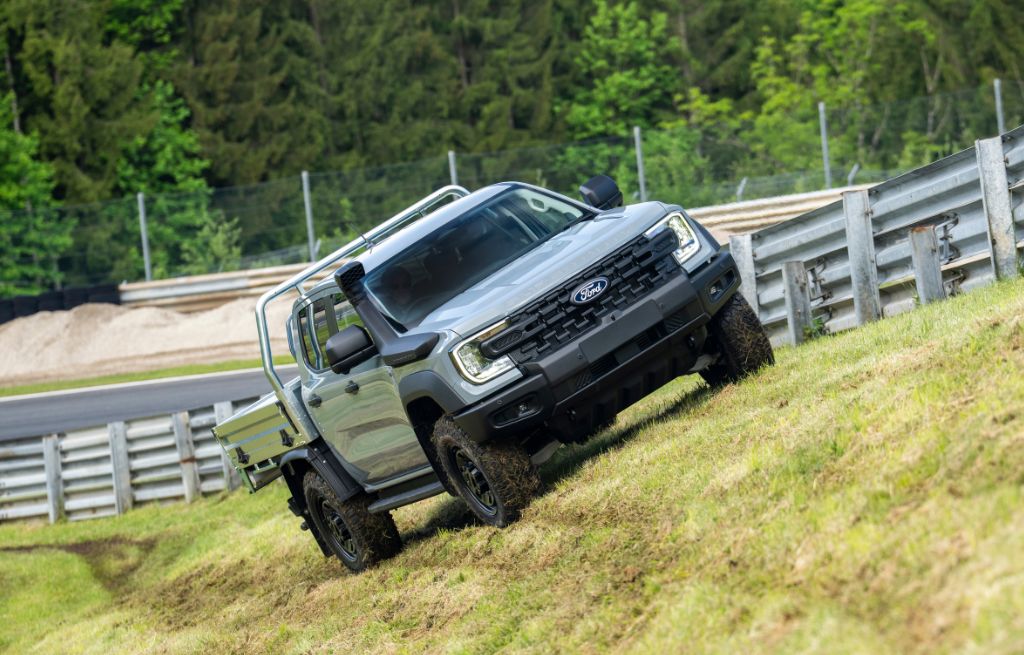
As we’ve reinforced the underbody with high-strength steel shielding and moved the breathers for the transmission and differentials high up away from water and sand, Ranger Super Duty is even more capable in a variety of off-road conditions.
Our target right through development was that Ranger Super Duty should be able to go anywhere a standard Ranger can, while carrying over 1,000 kg more cargo.”
Kyle Shearer, segment chief engineer, Ranger, Europe
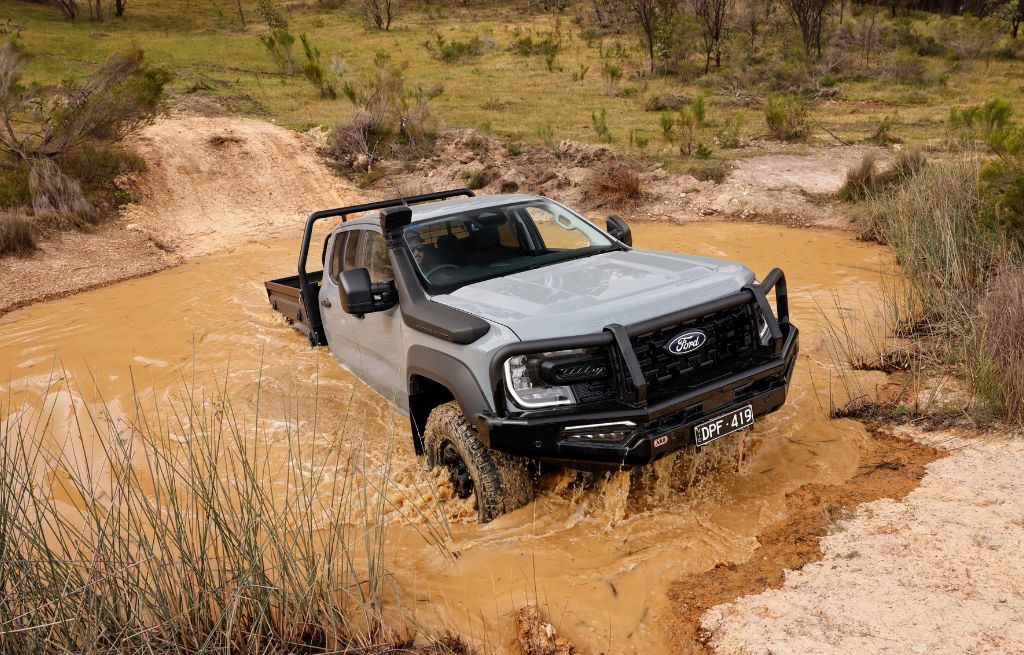
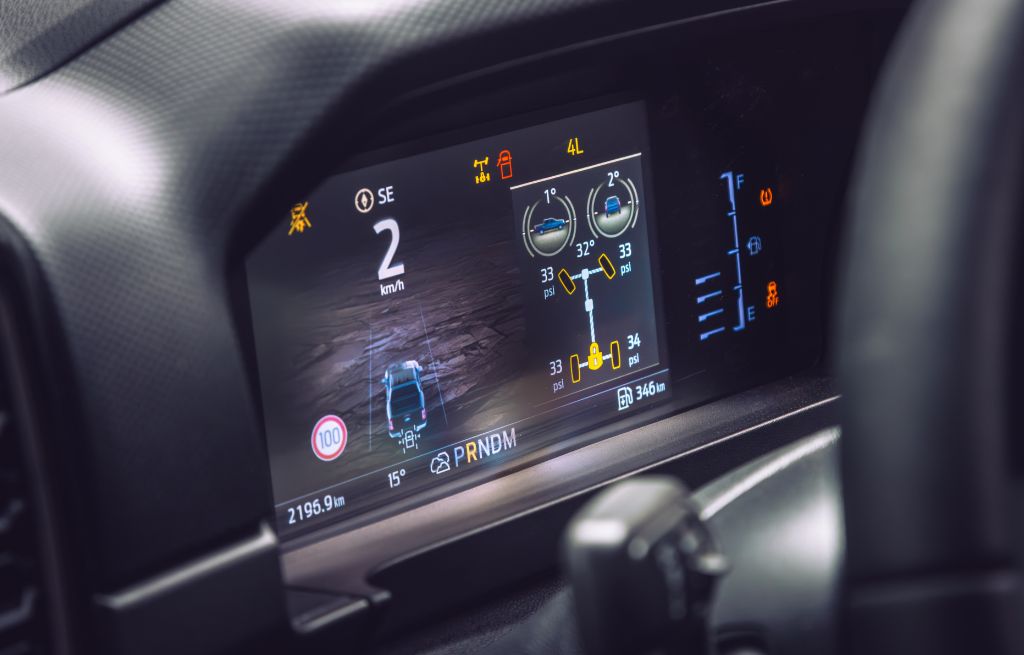
Ground clearance is almost 300 mm, and we’ve increased wading depth to 850 mm, although in torture testing we went well beyond that to see just what Ranger Super Duty could take over and over again.8 The intelligent all-wheel drive system constantly judges conditions so it can automatically put torque where it’s needed to keep a laden truck moving. You’ve still got different drive modes to suit changing conditions,6 and we added new electronically locking front and rear differentials as well as a two-speed transfer case.
You know you’re doing something genuinely new when you need to invent new methods to test it. One of ours for Ranger Super Duty was to drive through a mud bath again and again until 600 kg of mud filled the spaces around the wheels, and the truck had to still function as you’d expect. Mud’s horrible for vehicles — it traps heat, it’s corrosive and it can affect airflow, pumps and belts. Coping with that is an extreme version of a real-world scenario that our customers would be familiar with.
As well as new tests, we ran existing ones for longer, or with more weight, and in the drive modes that Super Duty customers are more likely to use. Our 24/7 rough road durability testing was so gruelling that we had to use robots for some of the driving because the vibration and impact levels were too much for humans to endure.
Lots of Ranger Super Duty testing happened in Australia: it’s a country that basically runs on pickups so it’s full of target use cases, and its extreme environments are ideal for us to push the features we’d developed to their limits. The team spent so much time in the desert with fully laden test vehicles that they actually counted the 797 sand dunes on the 590 km route across it. And then did the same again multiple times, just to be sure.
This is the first Ranger to feature Onboard Scales and Smart Hitch, so the SYNC touchscreen shows you your payload and helps you balance trailer weight for better stability. We’ve also included Pro Trailer Backup Assist, which allows you to reverse with a trailer using a simple knob on the console. It can be really helpful on tight sites and helps to make a potentially stressful part of driving more intuitive.
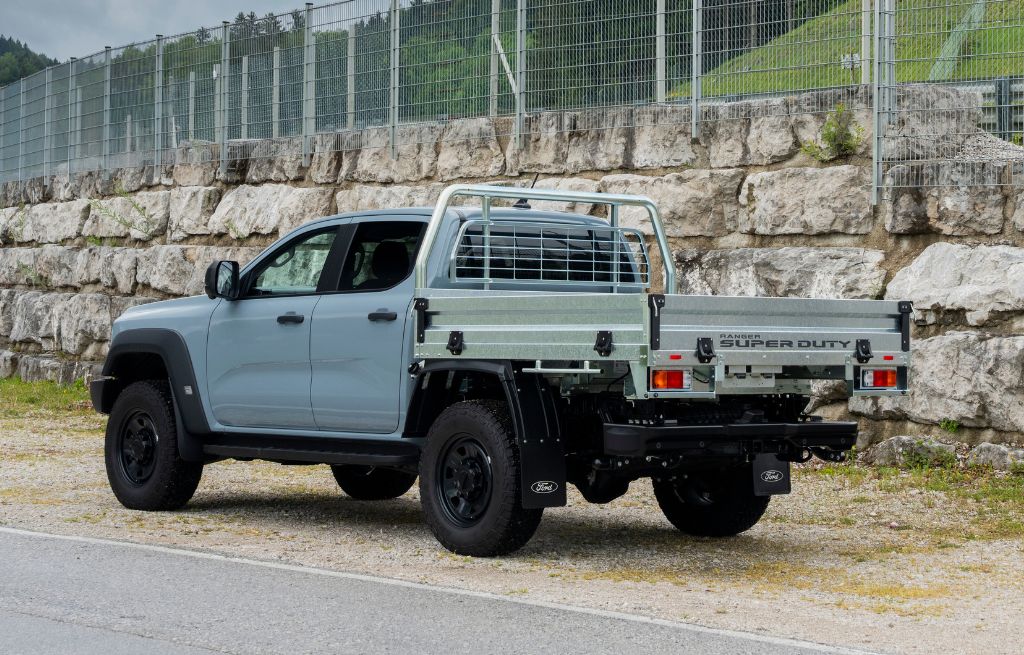
For this vehicle, we essentially viewed Convertors as our customers. These are the specialist businesses that take a base vehicle and convert it with additional equipment for a particular role such as a cherry picker or off-road fire engine. Ranger Super Duty fills such a specialist corner of the market that one-off conversions will be commonplace, so features to simplify the conversion process are designed into the pickup. For example, the rear sensors and cameras for the driver assistance systems are packaged in a single bar to minimise obstruction and electrical work.
The same logic applies inside. The cab features six pre-wired auxiliary switches and a built-in device holder so customers can add extra equipment without having to drill into the dashboard or modify the electrics.
It’s all about giving the customer exactly what they need, no matter how specialist the role.
Kyle Shearer is the segment chief engineer for Ranger in Europe.
1 Based on S&P Global Mobility sales data 2025. Austria, Belgium, Britain, Czech Republic, Denmark, Finland, France, Germany, Greece, Hungary, Ireland, Italy, Netherlands, Norway, Poland, Portugal, Romania, Spain, Sweden and Switzerland.
2 Ford Ranger homologated CO2 emissions 69-333 g/km WLTP, homologated fuel efficiency 3.0-13.7 l/100 km WLTP. The declared WLTP fuel/energy consumptions and CO2-emissions are determined according to the technical requirements and specifications of the European Regulations (EC) 715/2007 and (EU) 2017/1151 as last amended. The applied standard test procedures enable comparison between different vehicle types and different manufacturers.
3 Max payload varies and is based on accessories and vehicle configuration. See label on doorjamb for carrying capacity of a specific vehicle. Always properly secure cargo.
4 When properly equipped. Max towing varies based on cargo, vehicle configuration, accessories and number of passengers.
5 Don’t drive while distracted or while using handheld devices. Use voice-operated systems when possible. Some features may be locked out while the vehicle is in gear. Not all features are compatible with all phones.
6 Driver-assist features are supplemental and do not replace the driver’s attention, judgment and need to control the vehicle. It does not replace safe driving. See Owner’s Manual for details and limitations.
7 Cargo and load capacity limited by weight and weight distribution.
8 Always consult the Owner’s Manual before off-road driving, know your terrain and trail difficulty, and use appropriate safety gear. Try to avoid water higher than the bottom of the hubs and proceed slowly. Refer to your Owner’s Manual for detailed information regarding driving through water.